
Are reptile hides essential or just fancy terrarium decor? Is there difference between 3D printed and natural terrarium decor for your pets? These questions, often brushed aside as obvious, have been upended by recent peer-reviewed research. What scientists are discovering about hides for reptiles, spiders, snakes and insects could change how you set up every reptile enclosure you own.
The Controversy: Reptile Hides in the Spotlight
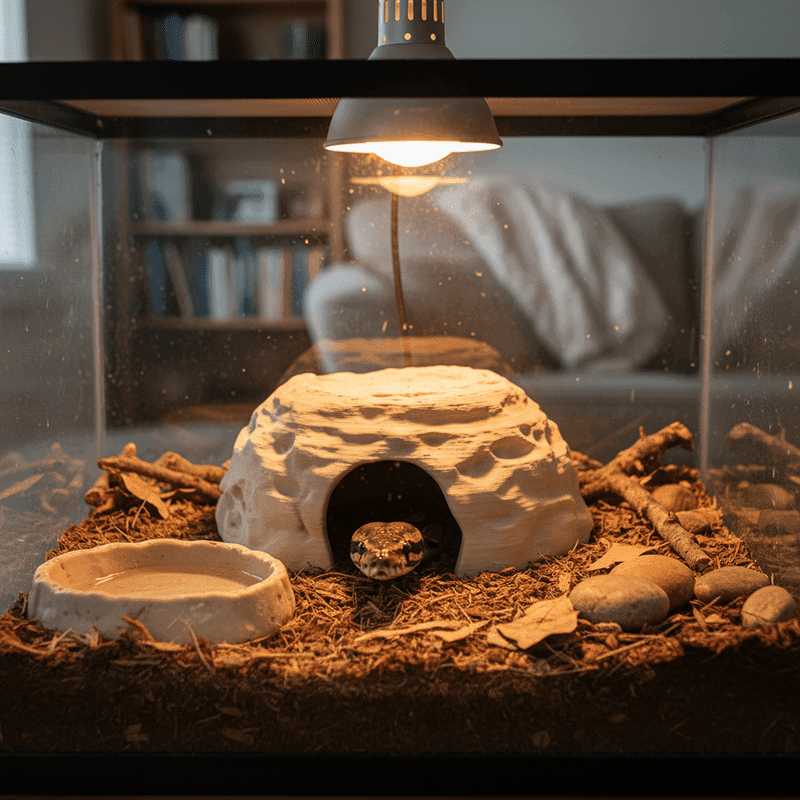
For years, hobbyists and experts alike have insisted pet hides are a must. But a 2025 study monitoring four reptile species around the clock found wildly different usage patterns. One African rock python used its hide constantly, while Aruba Island rattlesnakes barely touched theirs over a full month of observation — yet all appeared healthy [1].
So what’s the truth? Are reptile hides essential, optional or somewhere frustratingly in between?
Why Most Reptile Species Need Hides
Stress Reduction and Safety: numerous studies confirm that lack of proper hides leads to chronic stress with reptiles. Symptoms include weakened immunity, refusal to feed, abnormal behavior and even shorter lifespans [6] [8]. Hides act as safe zones, allowing pets to withdraw from perceived threats or overstimulation [7].
Thermoregulation and Comfort: hides aren’t just psychological safe spaces — they’re tools for survival. For ectothermic animals, like reptiles and many invertebrates, maintaining body temperature is life-critical. Scientific findings reveal that well-placed hides — one in a warm area, one in a cool zone — help species like leopard geckos regulate temperature more effectively [11].
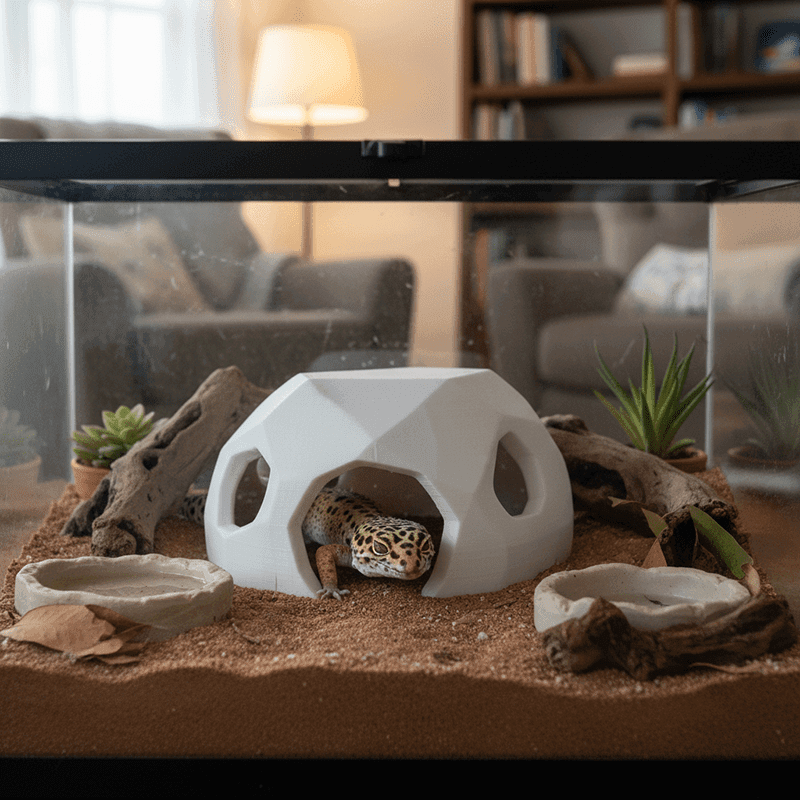
Natural Behavior Expression: in enriched with hides and bioactive features enclosures, animals like leopard geckos display more natural behaviors and stronger welfare indicators than those in bare setups [12] [13].
When Reptile Hides Might Be Optional
Some animals have evolved different strategies. Aruba Island rattlesnakes, for instance, use camouflage to “hide in plain sight” [2]. A 2025 study found they entered hides only 0.3% of the time under observation [1]. Similarly, research on bearded dragons showed little measurable welfare difference between standard and naturalistic setups — though better thermal gradients were noted in complex setups [15] [16].
Though, this doesn’t mean hides are irrelevant; it highlights species-specific behavior and needs.
Rack Systems: The Minimalist Dilemma
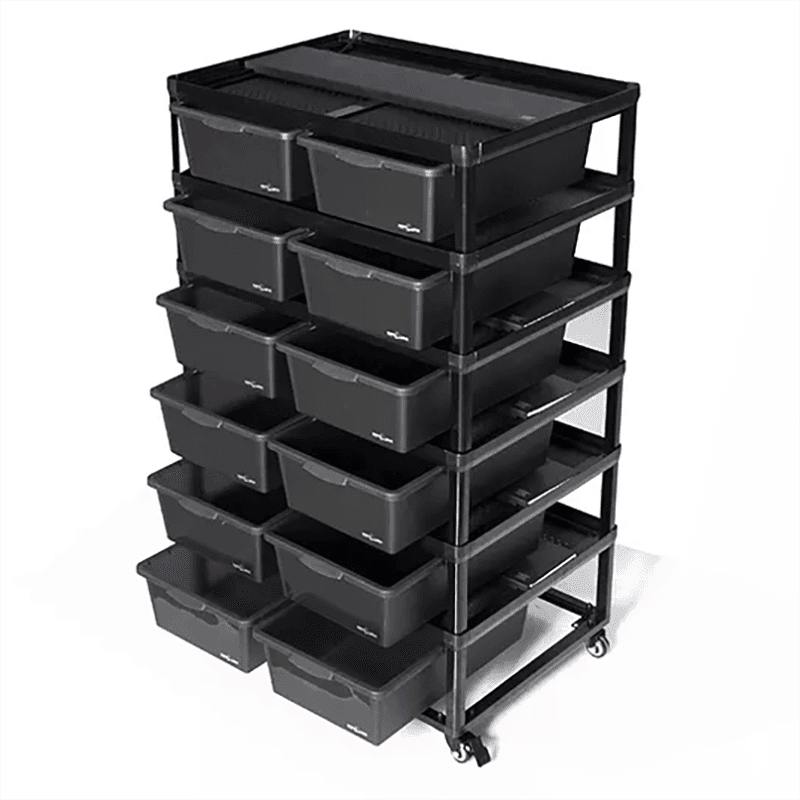
Rack systems — often criticized for lacking environmental enrichment — do allow survival. Snakes in these setups feed and reproduce, but they also exhibit more abnormal behavior and reduced activity [17]. Researchers concluded these systems aren’t appropriate for long-term welfare, despite their success in breeding contexts.
Spider Hides and Invertebrate Needs
Tarantulas are especially hide-dependent. Despite their tough image, they suffer from lack of shelter, which can result in stress curls and defensive behavior. One 2024 study showed Brazilian black tarantulas were 150% more active when given complex housing [21].
Jumping spiders, though active, also require hides for molting and safety [26].
Isopods and millipedes need shelter to avoid drying out, especially since many are nocturnal and rely on humid, protected microclimates [28].
Natural vs. 3D Printed Reptile Hides — Any Real Difference for Your Pets?
The distinction between natural and 3D printed hides matters more in some contexts than others, and the answer depends on what specific benefits you’re seeking for your animals.
What Reptiles Actually Prioritize
Recent research shows that reptiles are focused on terrarium decor functionality rather than material type. A 2025 study examining hide preferences across four reptile species found that what matters most to reptiles is not whether a hide is natural or artificial, but rather the hide’s location, humidity level and positioning. Reptiles showed clear preferences based on height (ground-level vs. elevated) and moisture (humid vs. dry), with behaviors aligned to each species’ natural history. The African rock python barely left its hide regardless of type, while the Aruba Island rattlesnakes rarely entered any hide during observation.
The fundamental need that reptile enclosure hides fulfill — reducing stress through security and privacy — is met equally by both artificial and natural materials. Without adequate hiding spaces, reptiles and amphibians develop stress that negatively impacts their activity patterns, appetite and overall health.
Where Texture and Material Surface Properties Matter
The primary practical difference lies in surface texture and how it supports natural behaviors, particularly shedding. Natural hides and materials with texture allow reptiles to rub against rougher surfaces, which facilitates skin shedding more effectively than smooth surfaces. Plastic and resin hides provide some texture benefit for shedding, but they lack the natural roughness found in bark, wood or rock — though this is rarely a concern in typical home terrarium setups.
For reptiles in captivity: the material type is largely inconsequential as long as the hide provides appropriate humidity, location and size for the species. Both natural and 3D printed hides reduce stress equally well when properly positioned.
For amphibians: artificial refuges work effectively for detection and habitat provision and amphibians use them successfully in research studies. The material itself appears secondary to the hide’s ability to maintain moisture and provide shelter.
For insects and arthropods: Material composition matters less than structural features. Insects are also primarily concerned with finding shelter, moisture and suitable microhabitats. Small beetles, springtails, isopods and other terrarium insects thrive equally in artificial environments if the physical characteristics (gaps, dampness, placement) match their needs. Though, for some insects surface properties become more significant. Research shows that porous substrates can actually reduce insect attachment ability because they absorb the secretions from insect adhesive pads. This means extremely porous or textured artificial surfaces could potentially affect how insects with grip-dependent behaviors interact with their environment.

Pet Safe 3D Printer Filament for Terrarium Decor
3D printing with PETG is significantly safer than PLA for heated terrarium environments. PETG is heat-resistant, food-safe and won’t warp or degrade under typical terrarium conditions, whereas PLA degrades in humid, warm environments. Let’s break down the differences shortly:
PETG Filament: Best for Pet Safety
- Food-safe and heat-resistant up to 200°F (93°C) [30]
- Non-toxic and doesn’t emit dangerous fumes under normal conditions
- Ideal for use in reptile enclosures with heating equipment
PLA Filament: Caution Advised
- Not suitable for heated setups due to low melting point [33]
- Can deform and release harmful vapors near heat sources
- Works okay for unheated setups without direct prolonged contact with water
So, PETG clearly wins for as a pet safe 3d printer filament in heated enclosures.
Important: don’t just rely on the filament type – always consult with your filament supplier and ask for technical data like food safe grade and heat resistance / melting point.
Interested in more deeper insights about PLA & PETG filaments? I’ve got these covered in my topics under the 3D Print Filament Insights section.
Conclusion: Think Beyond Survival — Aim for Thriving
Animal welfare science has evolved from “can it survive here?” to “is it thriving?” Hides are one of many tools that let your pet feel secure, express natural behaviors and regulate its body temperature. Whether you’re keeping snakes, geckos, tarantulas or millipedes, hides — especially 3D printed ones made from PETG — are a powerful addition to your setup. Don’t rely on old care sheets or minimal setups from decades past. Instead, observe your animals, learn their needs and upgrade their environments accordingly.
Interested in a similar research I’ve done for Aquarium and Shrimp Tank species? Check it out here.
Did you know, that 90% of my beautiful and aesthetic designs are fully compatible for terrarium use? Browse my store — the cheapest place to get genuine Aquireef3D designs & start building a cozy habitat for your terrarium pet today!
Didn’t find exactly, what you were looking for? I’ve got you covered – inquire a custom design, tailored to fit your wishes and exactly your pet’s needs!
- 3D Printing Layer Adhesion: Preventing Prints from Breaking Between Layers
- Is 3D Printing Food Safe? Here’s the Real Truth
- 3D Printed Reptile Hides Exposed: Crucial for Welfare or Just Terrarium Decor Hype?
- 3D Print Bed Adhesion — What Works Best To Avoid Failed 3D Print?
- Are Aquarium Caves Really Critical for Fish and Shrimp Health? Does 3D Print Decor make a Difference for your Aquatic Pets?